Search engines are no longer just keyword-matching tools. AI-powered search engines now interpret intent, summarize multiple sources, and answer questions directly on the results page—often before you click a single link. For anyone who relies on the web for research, shopping, or work, this shift changes how information is found, trusted, and used.
This article breaks down how AI-powered search engines are changing online information, what it means for everyday users, and the practical steps you can take to get accurate answers faster. You will learn where these tools shine, where they fall short, and how to verify what they tell you.
Introduction
Search engines used to work like a card catalog. You typed a few keywords, the engine matched them against an index of pages, and you received a list of links ranked mostly by keyword relevance and link popularity. That model served the web well for two decades, but it is rapidly being replaced. AI-powered search engines now interpret intent, summarize sources, and generate direct answers rather than simply pointing you toward them.
This shift matters to anyone who looks things up online, which today means nearly everyone. The way results are produced affects which sources get seen, how quickly you get an answer, and whether that answer can be trusted. This article explores how AI-powered search engines are changing online information with clear, practical guidance, so you can adapt your habits and keep getting reliable results.
The core idea is simple: the search box has become a conversation partner rather than a lookup tool. Understanding how that partner works helps you use it deliberately instead of passively accepting whatever appears at the top of the page.
Key Concepts
Before exploring practical strategies, it helps to understand the vocabulary. Several concepts recur throughout any discussion of modern search.
Generative answers versus ranked links
Traditional search returns a ranked list of web pages. AI-powered search often produces a synthesized answer generated from multiple sources, with citations attached. This “answer engine” model saves time but compresses nuance, which means you need to check the sources rather than accept the summary at face value.
Semantic understanding
Older engines matched literal keywords. Modern engines use language models to understand meaning, context, and intent. A query like “why does my laptop fan run loudly” no longer depends on the exact words matching a page title. The engine grasps what you are asking and surfaces material that addresses the underlying problem.
Retrieval-augmented generation
Many AI search tools combine two processes: they retrieve relevant documents from the web, then generate a response grounded in those documents. This approach reduces fabrication compared with a model answering purely from memory, but it does not eliminate errors. Sources can be misread, outdated, or poorly chosen.
Ranking signals in an AI era
For anyone who publishes content, the stakes are high. AI summaries can absorb traffic that once flowed to individual websites. Meanwhile, engines increasingly reward original, well-structured, trustworthy material that is easy to quote and cite. Quality and clarity matter more than ever.
Personalization and context
AI search systems factor in your location, language, and prior interactions. Two people can ask the same question and receive different answers. This makes search results less universal and more tailored, which is convenient but can quietly narrow the range of information you encounter.
Deep Dive
Understanding the fundamentals of how AI-powered search engines are changing online information helps you make informed decisions, so let’s examine what is actually happening beneath the surface.
From ten blue links to synthesized answers
The most visible change is the answer box. Ask a comparison question or a “how do I” question and you will often get a paragraph-length response assembled from several sites, with small citation links. This is faster than opening five tabs, but the synthesis is only as good as the sources selected and the model’s ability to represent them accurately. Numbers, dates, and attributions are the most common places for subtle errors to creep in.
The compression problem
When a search engine summarizes, it compresses. Compression gains efficiency but loses detail: exceptions, caveats, and disagreements between experts often disappear. For simple factual queries such as opening hours or unit conversions, this trade-off is harmless. For health, legal, or financial questions, the missing nuance can matter a great deal. A good habit is to treat a synthesized answer as a starting map, not the final destination.
What happens to the websites behind the answers
Publishers once counted on clicks from search. When an AI summary answers the question directly, users may never visit the source. This has two consequences. First, the economics of free content can become strained. Second, the engines that generate summaries depend on those same publishers for the raw material. The result is a delicate interdependence, and the balance is still being worked out.
Opportunities for everyday users
The benefits are real. Multi-turn conversation lets you refine a question naturally. Follow-up prompts such as “explain that more simply” or “what are the counterarguments” let you steer the inquiry. AI search is also more forgiving of messy, natural-language queries, which lowers the skill barrier for people who never learned keyword syntax. In practical terms, you can explore a topic faster, then drill into primary sources when accuracy matters.
Risks worth knowing
The main risks fall into three categories.
- Hallucination: A generated answer may state something confidently that is simply false, sometimes with a citation that does not support it.
- Stale information: Models can draw on outdated material even when fresher sources are available.
- Source opacity: Citations are helpful, but it is not always clear why one source was chosen over another, or what was left out.
None of these risks means avoiding AI search. They mean using it with an appropriate level of verification, matched to how much the answer matters.
Best Practices
Reliable information and consistent habits lead to better long-term outcomes. These practices apply whether you are a casual searcher, a student, or a professional.
- Treat answers as drafts. Read the cited sources for anything consequential. If a claim drives a decision, confirm it in at least two independent sources.
- Ask sharper questions. Specify context, timeframe, and constraints. “Is this supplement safe for someone taking blood thinners, according to medical guidelines?” will outperform a vague question.
- Use follow-ups deliberately. Ask the engine to cite sources, list disagreements among experts, or explain the reasoning. This surfaces uncertainty.
- Check the date. For fast-moving topics, verify how current the information is and look for a publication date on sources.
- Cross-check with a second engine. A quick comparison often reveals where one system is overconfident.
- Keep a record of important findings. Save links to primary sources, not just the summary, so you can revisit them later.
Step-by-Step Guide
Use the following sequence to build a dependable routine for AI-powered search.

Step 1: Understand the fundamentals
Know the difference between a generated answer and a ranked list. Recognize that the engine retrieves sources, synthesizes them, and may make mistakes. This basic understanding shapes everything that follows, because you will know where to look when something seems off.

Step 2: Assess your starting point
Reflect on your current habits. Do you accept the first answer? Do you check citations? Do you know which engines you trust for which topics? Write down patterns you notice. Most people discover they verify quick facts appropriately but skim past the same check on more consequential questions.
Step 3: Set clear goals
Define what “good enough” means for each query type. For a recipe substitution, a quick answer is fine. For a medical dosage or a legal requirement, you need primary sources and professional guidance. Setting this threshold in advance prevents both over-checking trivia and under-checking decisions that carry risk.
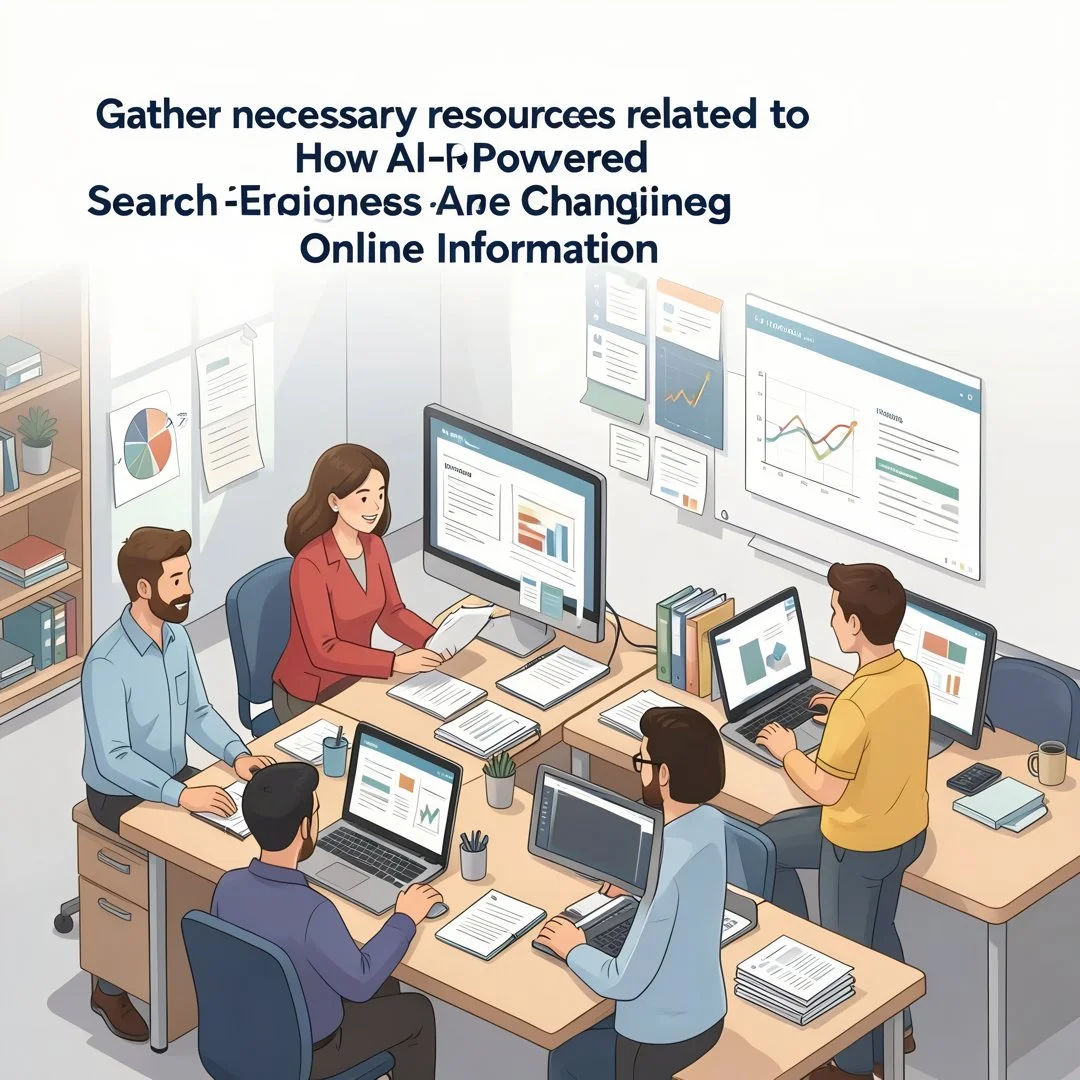
Step 4: Gather necessary resources
Bookmark two or three AI search tools you like, plus a handful of authoritative sources in the areas you care about, such as official government pages, recognized institutions, or peer-reviewed journals. Having these ready makes verification fast rather than a chore you skip.

Step 5: Apply the core methods
Write natural-language queries with context. Review the citations. Ask follow-ups. Compare against a second engine when the topic matters. Click through to at least one primary source. Over time, these steps become automatic, much like checking a map before a long drive.

Step 6: Monitor your progress
Periodically assess whether your habits are producing reliable outcomes. Notice any errors you caught or any you missed. Adjust your thresholds and preferred sources as engines evolve, since AI search tools change quickly.
FAQ
What should I know about How AI-Powered Search Engines Are Changing Online Information?
The essential takeaway is that search has shifted from listing pages to generating answers. This makes information faster to access but places more responsibility on you to verify citations and check sources. The change is not inherently good or bad; its value depends on how deliberately you use these tools.
Who is this guide for?
It is for general readers who use search engines daily and want to get accurate information without spending excessive time. It is also useful for students, researchers, and content creators who need to understand how visibility and trust work in an AI-driven search landscape. No technical background is required.
Do AI search engines replace traditional search?
Not entirely. Many systems combine both, showing a summary followed by a list of links. Traditional search remains valuable when you want to browse a range of perspectives or explore a subject broadly.
How can I tell if an AI-generated answer is reliable?
Check whether it cites sources, whether those sources actually support the claim, and whether the information is current. Agreement across independent, reputable sources is a strong signal. Confidence in tone is not evidence of accuracy.
Conclusion
AI-powered search engines have fundamentally changed the route from question to answer. They interpret intent, synthesize information, and deliver it conversationally, which makes finding information easier than ever. But ease carries a trade-off: summaries compress detail, citations can be misapplied, and not every confident answer is correct.
Reliable information and consistent habits lead to better long-term outcomes. By understanding the fundamentals, treating answers as drafts worth checking, and following a steady routine of verification, you can enjoy the speed of AI search without surrendering accuracy. The tools will keep changing; the discipline of verifying what matters does not.
You now have a solid foundation for How AI-Powered Search Engines Are Changing Online Information. Apply the best practices above and revisit this guide as your needs evolve.