Last updated: November 1, 2026. Reviewed under our editorial policy.
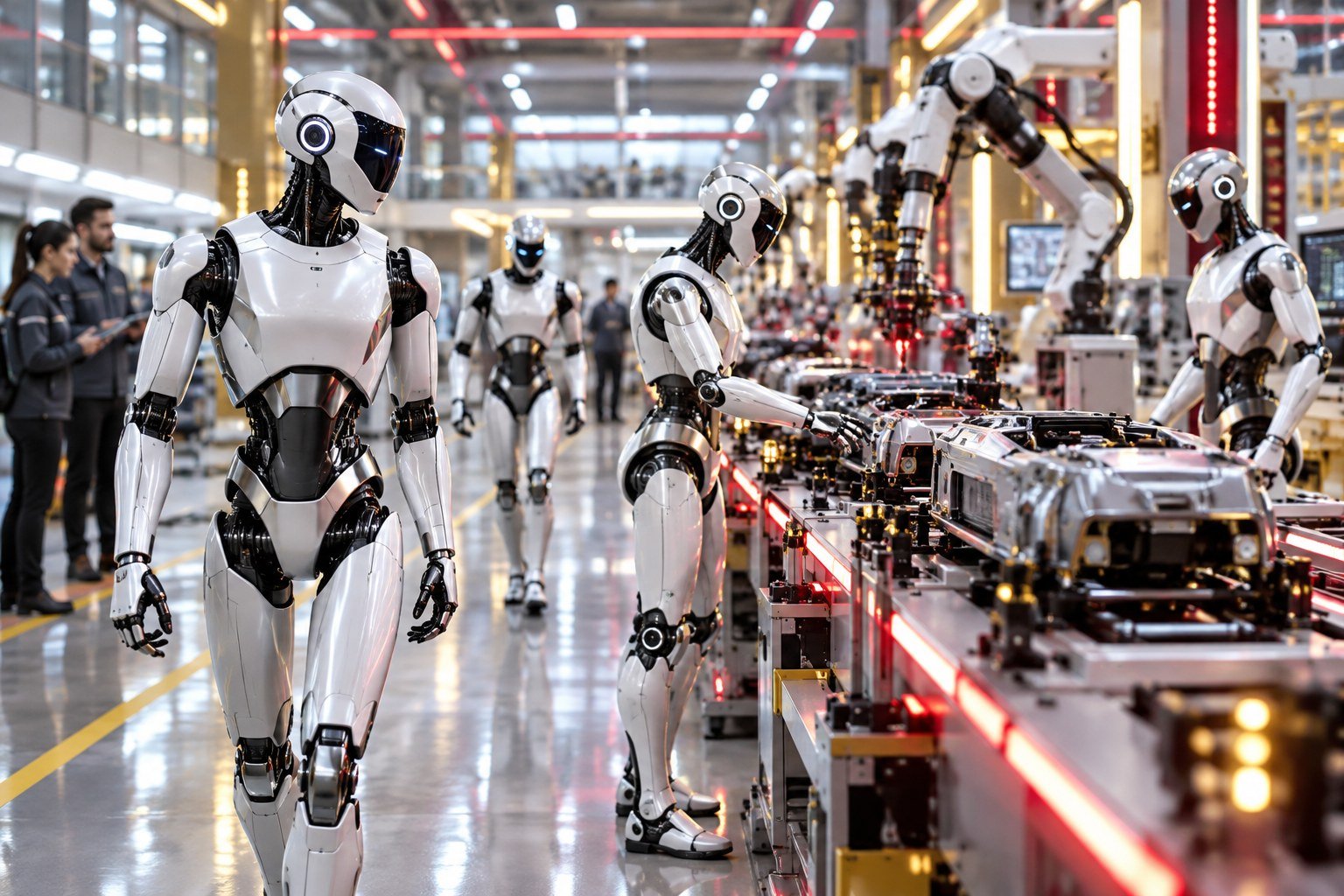
Walk through a Chinese factory, shopping mall or tech expo in 2026 and a robot on two legs may well wave back at you. China robots in 2026 are no longer a science-fair idea. The story of humanoid robots in China has moved from stage demos to real price tags in just a few years. This guide answers the questions people actually ask: which Chinese humanoid robots are real, what do they cost, who builds them, and how do they compare with American machines?
The quick answers:
- Cheapest: Unitree’s R1 line starts at about $4,290 on the official store.
- Best known: Unitree’s G1 lists at about $13,500 for the base model.
- Most serious for factories: UBTech’s Walker S2, sold through enterprise deals at an estimated $68,000 to $120,000.
- New heavyweights: carmakers Xpeng and BYD are building their own humanoids.
- Reality check: most humanoid sales still go to labs and schools, not factories.
Prices below are published or reported list prices from 2026. They change by region, reseller and date, so confirm before you buy. This article is for information only; read our disclaimer.
Why China Is Moving So Fast on Humanoid Robots
China has more than 140 domestic humanoid robot makers and over 330 humanoid models released so far, according to a 2026 industry guide. That is a huge number for a technology that barely existed as a product five years ago. Three forces explain it.
Factory experience. The BBC reports that more than two million robots already work in China’s factories, so suppliers, parts and engineers are close at hand (BBC).
Low build costs. The Guardian reported startups such as Galbot with robots from about $1,600, and noted that how easy it is to build robots helps explain the crowded field (Guardian).
Heavy investment and training. The Economist describes China training thousands of humanoid robots to learn real tasks (Economist). Market tracker TrendForce expects more than 50,000 humanoid shipments worldwide in 2026, with Chinese brands supplying a large share.
Top 10 Humanoid Robots in China (2026)
We ranked these by how real they are: can you buy one, does it work outside a demo, and is the price public? The list covers the main China humanoid robot models worth knowing.
1. Unitree R1: The Price Breaker
The R1 is a compact humanoid, around 123 cm tall, aimed at developers and learners. Unitree lists the R1-D at $4,290, the R1 AIR at $4,900, the R1 at $5,900 and the R1 EDU at $10,500, based on a July 2026 price tracker. In June 2026 Unitree also cut its China price to 29,900 yuan, about $4,150.
2. Unitree G1: The Research Favorite
The G1 is the Chinese robot most people have seen in viral videos. The base model lists at $13,500 on Unitree’s store. Developer-ready EDU versions sold through US resellers run from $43,900 to $73,900, according to a Unitree price guide.
3. Unitree H2: The Full-Size Model
The H2 stands about 170 cm tall with around 31 joints of freedom. Its official price is $29,900, though stock has been limited, and US resellers list it near $40,900. A higher H2 Plus tier is shown at $100,000 on a contact-sales basis. In August 2026 Unitree also showed a sprinting humanoid it called “Superman,” reported at about 12.66 meters per second, per Wikipedia’s Unitree entry.
4. UBTech Walker S2: The Factory Worker
UBTech, based in Shenzhen, builds the Walker series for industrial work. The S2 can swap its own battery and handle heavy loads. Pricing is mostly enterprise quotes, with estimates between $68,000 and $120,000 and rental-style plans reported near $5,000 a month.
5. AgiBot X2: The Performer
AgiBot, from Shanghai, sells the X2, a half-size robot about 131 cm tall and 35 kg, for a published $24,240. It is built for entertainment and commercial shows. AgiBot is also reported to have reached about 20,000 robots delivered in total across its lines.
6. Xpeng IRON: The Carmaker’s Bet
Xpeng showed IRON walking off an assembly line on its own and says it runs on in-house AI chips. The company is aiming for mass production around the end of 2026. One tracker estimates the price near $150,000, but that figure is reported, not official.
7. EngineAI T800: The Mid-Price Challenger
The T800 appears in 2026 price guides at roughly $25,000. Public details are thinner than for Unitree or UBTech, so treat it as a model to watch rather than a proven product.
8. Galbot: The Hyped Startup
The Guardian called Galbot one of China’s most hyped humanoid startups and reported robots starting at about $1,600. Low prices like this usually mean smaller, simpler machines, so compare capabilities before comparing prices.
9. Noetix Bumi: The Budget Bot
Bumi is a compact robot launched in Chinese retail at 9,998 yuan, about $1,400, making it one of the cheapest humanoids ever sold to consumers. Noetix now quotes prices on request, so it is hard to buy directly.
10. Droidup Moya: The Lifelike Companion
Moya is a 5.5-foot service and companion robot described in video coverage as having warm silicone skin, facial expression mirroring and an internal artificial spine. It sits in the growing group of Chinese androids that aim to look and act human.
Also Watch: BYD’s First Humanoid
China’s biggest electric carmaker published a design patent on October 9 showing its first self-developed humanoid. It looks like the “Xiao Di” robot BYD has previewed, but the company has not confirmed a production model yet (CarNewsChina). For wider coverage, see our weekly humanoid robotics news.
Chinese Humanoid Robots Price Table
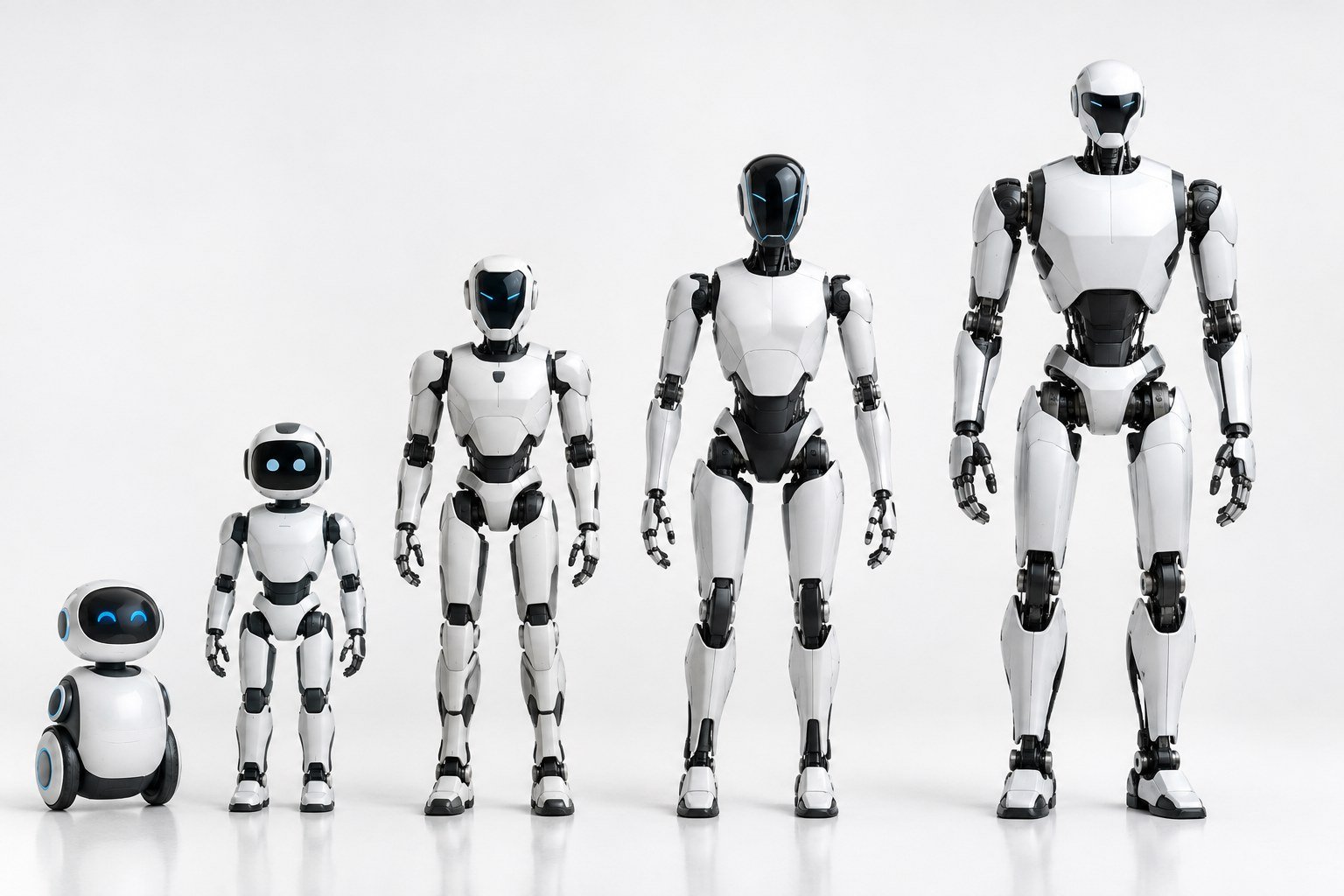
This table puts the main Chinese humanoid robots side by side. Swipe sideways on a phone to see every column.
| Robot | Maker | Reported price | How you buy |
|---|---|---|---|
| Unitree R1 | Unitree | $4,290 to $10,500 | Official store |
| Unitree G1 | Unitree | $13,500 base, up to $73,900 | Store and resellers |
| Unitree H2 | Unitree | $29,900 official, about $40,900 via resellers | Limited stock |
| Walker S2 | UBTech | Est. $68,000 to $120,000 | Enterprise deals |
| AgiBot X2 | AgiBot | $24,240 | Published price |
| IRON | Xpeng | Est. $150,000 (reported) | Not yet on sale |
| T800 | EngineAI | About $25,000 | Guide listing |
| Galbot robots | Galbot | From about $1,600 | Varies by model |
| Bumi | Noetix | About $1,400 at launch | Quote on request |
If you are searching for a Chinese robot for sale, start with Unitree’s official store, where prices are public. Keep shipping, warranty and import rules in mind for your country.
US Rules Affecting Chinese Robots
On July 28, 2026, the US Federal Communications Commission added foreign-produced humanoid and quadruped robots to its Covered List. This blocks new models from getting the equipment authorization needed to be imported or sold in the US. Models approved earlier can still be sold, which includes many Unitree robots. On October 28, 2026, a White House proclamation under Section 232 also ordered trade talks over robotics imports, and reports say it set no new tariff yet. If you are in the US, ask the seller for the exact model and FCC ID, and see our humanoid robot buying guide.
Chinese Robotics Companies to Know
The leading Chinese robotics companies fall into three groups.
- Specialists: Unitree began with quadruped robots in 2016, started selling humanoids in 2024, and has been through a listing inquiry with the Shanghai Stock Exchange. UBTech (Shenzhen) and AgiBot (Shanghai) focus on service and factory humanoids.
- Carmakers: Xpeng and BYD use their manufacturing and AI-chip know-how to enter the race.
- Startups: Galbot, EngineAI, Noetix, Droidup and Sharpa chase low prices, new designs or lifelike looks.
Only Unitree, AgiBot and UBTech are reported to ship in the thousands. Most other platforms exist in dozens or low hundreds.
Where Chinese Robots Already Work
Does China have robots at work today? Yes, but mostly machines without legs. China’s factories run more than two million industrial robots, the BBC says. Humanoids are newer. Video reports show Sharpa’s robot following a 55-step ice cream recipe at a Shanghai restaurant, and Xpeng describes IRON for factory tasks, campus guidance and store reception. These are early pilots, not mass deployments. China deploys humanoid robots mainly in showrooms, car plants and retail trials, and China humanoid robot deployment at real scale is still ahead. A robot factory in China can now build humanoids by the hundreds, but orders from paying industrial customers are the missing piece.
New Chinese Robots and China AI Robots to Watch
Several new Chinese robots arrived or were previewed this year. Xpeng’s IRON and BYD’s first design show carmakers joining the race, while Unitree keeps adding models at lower prices. China AI robots are also getting smarter software. Xpeng says IRON runs on its in-house Turing chips, and The Economist describes Chinese teams training thousands of robots to learn tasks. Chinese AI robots from startups often rely on the same approach: collect data, train, repeat.
The big question for China robots in 2026 is mass production. Plans for China mass production humanoid robots are real, but results so far are counted in thousands of units, not millions. Here is what we are watching next:
- Whether Xpeng hits its late-2026 mass-production target for IRON
- Whether BYD confirms a production version of its humanoid
- Further price cuts from Unitree and its stock exchange listing
- Named factory customers for UBTech’s Walker S2
Chinese Robots vs American Robots
How do the China robot makers compare with US rivals? Here is our editorial view, based on public prices and plans.
- Price and availability: Chinese makers sell robots now, often at published prices. Tesla’s Optimus has a reported $20,000 to $30,000 target but is not on sale. Tesla said on October 21, 2026 that early production had started at Fremont (see our Tesla Optimus fact check). The 1X NEO home robot is listed at $20,000 or $499 a month on US preorder. Figure and Boston Dynamics do not publish prices.
- Scale: China leads in volume and low-cost parts. Boston Dynamics says it wants to build 30,000 humanoids by 2028, a goal we cover in our latest humanoid update.
- Not every robot walks: US sidewalk robots already do paid delivery work, as our Serve Robotics news shows.
For deeper technical reporting, follow IEEE Spectrum’s humanoid robots section.
Human-Like Chinese Robots (Androids)
Many readers search for Chinese human robots because of videos showing lifelike faces and skin. Moya from Droidup and UBTech’s bionic U1 series, built for companionship and service, are the best-known examples. Realistic robots raise fair questions about privacy, honesty and emotional dependence, so look at who controls the data before you trust one in a home.
Our Take: Hype or Real Signal?
Headlines about China humanoids can sound like a done deal. This scorecard is our own opinion based on the facts above, not a forecast.
| Claim | Our read | Why |
|---|---|---|
| “China has 330+ humanoid models” | Real, but misleading | A model count is not a sales count. Only three brands ship in the thousands. |
| “Robots now cost $1,500 to $5,000” | True for small robots | Cheap units are compact and limited. Full-size robots still cost much more. |
| “Humanoids are working in factories” | Early | About 73.6% of Unitree’s humanoid revenue in early 2025 came from research and education, and about 9% from industry, per its listing filings. |
| “Mass production is here” | Watch closely | Xpeng’s plan is a target for late 2026, not a finished result. |
| “It is a bubble” | Possible | Some video commentators warn of overheating. Money is flowing faster than proven revenue. |
3 Questions to Ask About Any Robot Claim
- Can I buy it today? A launch video is not a product.
- Who is paying? Named customers and contracts matter more than demos.
- How much does a human still do? Ask what share is autonomous.
Concerns About China’s Humanoid Robots
Alongside the excitement there are real concerns. China humanoid robot concerns include safety around people, data privacy when cameras and microphones connect to cloud services, hidden reliance on remote human operators, and the risk of a bubble if sales do not catch up with funding. Buyers outside China should also check software updates, local laws and who can access a robot’s data. None of this means you should avoid Chinese robots, but it is a good reason to ask questions before you buy or deploy one.
Frequently Asked Questions About Humanoid Robots in China
Are the humanoid robots in China real?
Yes. Robots such as Unitree’s R1, G1 and H2 are sold with public prices. Others, like Xpeng’s IRON and BYD’s design, are still pre-launch.
How many humanoid robots does China have?
There is no reliable public count. Known figures are more than 140 makers, over 330 models, and AgiBot’s reported 20,000 robots delivered. Treat any single national total with caution.
Has China released any humanoid robots?
Yes, dozens. The most visible are from Unitree, UBTech, AgiBot, Xpeng and a long list of startups.
Which country has the most advanced humanoid robots?
No country clearly leads in every area. China leads in volume and price, while US companies lead in funding stories and headline AI plans. The gap is changing every few months.
How much does a Chinese humanoid robot cost?
Published prices run from about $1,400 for compact consumer models to $100,000 for premium research robots. Most serious developer robots sit between $13,500 and $30,000.
Where can I buy a Chinese humanoid robot?
Humanoid robots from China are sold worldwide, and the safest route is the maker’s official store or an authorized reseller. Check shipping, warranty, software support and import rules before you order.
Bottom Line
The story of humanoid robots in China is real, fast-moving and still early. Prices are falling and models are multiplying, yet most robots still work in labs, shows and pilots rather than on factory floors. Bookmark this page, because we update it when major launches land. Spotted a mistake? Contact us, or learn more about NewzVista.
Sources: BBC; The Guardian; The Economist; CarNewsChina; Wikipedia (Unitree); Robozaps, Robot Price Index and Robot Sourced price guides; There’s A Robot For That. Data first gathered October 12, 2026, reviewed again November 1, 2026, and may have changed.
3 thoughts on “Humanoid Robots in China: 10 Game-Changing Machines and Their Real Prices (2026)”